In Harare, the capital city of Zimbabwe, I was invited to speak on my experiences working in Bhutan, India, Nepal, and Rwanda, and to share lessons that are relevant for the region. The Zimbabwe Economic Competitiveness Conference was organized by The Eastern Caucus. I had met Itai Zimunya, the key coordinator of the conference, in Kathmandu in 2024 through an introduction by Robin Sitaula and Deependra Chamlagain of The Samridhi Foundation. We had discussed South-South learning, and this conference was a great opportunity to highlight lessons from the multiple countries where beed works.
Visiting a country for the first time is always intriguing, as you learn so much by talking to people from different walks of life. I love conversations with cab drivers, bartenders, random people in markets, and small business owners. With English widely spoken, it was much easier to communicate.
Here are three reflections from my visit.
The Country Size, Population, and Per Capita Income
Zimbabwe is a country with 390,757 square kilometers, about twice the size of Nepal and fifteen times the size of Rwanda. Yet, with a population of 16.6 million, it is half of Nepal’s 30 million and 25% more than Rwanda’s 13.2 million. People were surprised when I shared these numbers, as many imagined Nepal to be a very small country.
Nepal and Zimbabwe have the same Gross Domestic Product (GDP) of USD 44 billion. Rwanda and Nepal share a similar per capita income, which means Zimbabwe’s per capita income is roughly double that of both Nepal and Rwanda. This made me question whether per capita is always the right indicator of a country’s economic well-being, as Zimbabwe did not have the look and feel of a country significantly more prosperous than Nepal or Rwanda. It intrigued me. A key explanation lies in the composition of GDP: Zimbabwe produced 40 metric tonnes of gold last year. Mining is central to its economy, currently contributing 70% of Foreign Direct Investment, 80% of exports, 19% of government revenues, 3% of direct formal employment, and 13.5% of national income, combining both GDP and Gross National Income (GNI). High GDP, therefore, exists alongside deep inequities.
The Currency Story
One of the most striking things for any visitor to Zimbabwe is the widespread use of US dollar bills. I have never seen one-dollar notes that have passed through so many hands, leaving you wondering how many more they will circulate through. After 2008 currency collapse, Zimbabweans trust the USD, and despite the introduction gold-backed ZIG, it has not replaced the US dollar. The situation is like Cambodia, but digital transactions in Zimbabwe are still in their infancy.
Reflecting on Bhutan and Nepal, both have benefited from pegging their currency to the Indian Rupee. Although I have argued that exchange rates are often political rather than economic decisions, observing Zimbabwe’s currency challenges made me appreciate how fortunate we are to have avoided such high levels of inflation and extensive informal economy. Zimbabwe could consider joining the Rand Currency Union led by South Africa, which would provide greater monetary stability. South Africa has also been one of the most innovative ecosystems in digital finance and access to finance. Beed’s own collaboration on access to finance led by the UNCDF office and institutions like Center for Financial Inclusion (CENFRI) in Cape Town, have been shaped by such innovations. I also shared the Rwanda’s success in mobile money, where people can use mobile money platform even without a smartphone.
Tourism
While researching tourism in Zimbabwe, I was surprised to find that both Nepal and Zimbabwe receive a similar number of visitors, yet Zimbabwe earns almost the double. In 2024, Zimbabwe welcomed 1.6 million visitors, while Nepal welcomed 1.2 million visitors. However, the tourism earnings of Zimbabwe is USD 1.2 billion compared to Nepal’s USD 700 million. Higher-end tourism offerings appear to explain this difference. When I visited Victoria Falls on a one-night, two-day package, it reminded me of the premium tourism Nepal used to offer in the early 1990s. Policy reforms related to visas, incentives, and long-term strategic direction have helped Zimbabwe transform its tourism sector over the past decade. For Nepal, the key lessons remain the same: push for quality tourism, reduce intermediaries and eliminate cartel practices through digital solutions, and ensure policy predictability for investors, especially in FDI.
Tourism, at its heart, is about people, and I was fortunate to experience the warmth and hospitality of the Zimbabwean people firsthand. My driver and guide, Phaneul, who showed me around Victoria Falls, was not only highly knowledgeable but also shared countless stories and insights along the way. It reminded me of the golden days of tourism in the 1990s, when conversations with naturalists in Chitwan were the true highlight of every trip.
In Nepal 2043, I advocate for deeper interaction and learning among emerging markets and developing economies (EMDE). Visiting Zimbabwe gave me the chance not only to share experiences but also to dive into conversations, reading, and reflection on different countries. These visits continue to enrich my understanding of Nepal’s economic transformation over the past two decades and strengthen my belief in its potential.
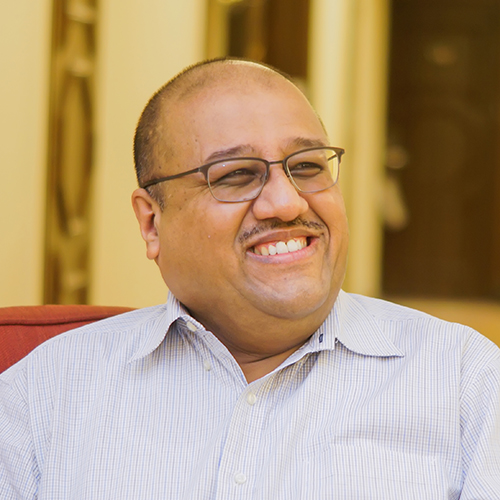
Sujeev is the founder CEO of beed. He leverages over 25 years of experience in diverse fields and geographies to advise, lead and inspire. With comprehensive networks in Nepal’s public, private, civil and diplomatic sectors, Sujeev is a trusted business and policy advisor and respected strategic thinker. From economies of developing countries to economies of human beings, he moves across different worlds, with his passion for the Himalayas being the axis.