
The results of the parliamentary elections have clearly given a thumping majority to the Rastriya Swatantra Party (RSP). It is first time in the post-1990 era that there has been a party that is getting a two-thirds majority and has the mandate to bring about changes that no previous governments would have thought about. This was, in many ways, Jana Andolan 3, where people revolted through the ballot boxes. I look back at my own writings and the work at Nepal Economic Forum (NEF) to provide six important areas of focus for the new government.
Internal Functioning and Governance: The September uprising was against corruption and the lack of good governance. This has to be the primary area of focus. In the past, one of the biggest challenges we have continuously heard about across different coalition governments is the lack of coordination across different government agencies and ministries as well as within the party. There is an opportunity to correct that. Like large corporations, the party and the government must function through efficient internal control systems and bodies that will coordinate functions like how investment, audit, and other committees do for corporations. This also brings better perspectives into the chain of command and responsibility of different agencies. Bureaucracy driving politics and politicians in many areas must change. In the past, internal governance within governing parties was pathetic. I hope the RSP will set high standards regarding this. It has an opportunity to redefine how political parties are managed. Further, another area of discontent has been the culture of impunity where people have escaped prosecution. It will be important for the new government to take action against those mentioned in the Kari Commission Report and implement steps to avoid uprising out of discontent to go so far.
Economic Transformation is the Key: For the first time in the history of Nepal, there is an opportunity to work on transforming Nepal’s economy in a significant way through promoting investments, creating jobs, and investing in infrastructure. There has been enough work done on identifying what needs to be done for reforms. What is now necessary is to implement amendments to laws, functioning, and structure to achieve reforms. In the past twenty years, the Nepali economy has been able to grow six times despite challenges. It should be able to grow six times in the next ten years as well! In the Nepal Vision 2030 document, led by an RSP leader Swarnim Wagle, I had contributed a section on investments, where it highlighted the need for USD 8-10 billion of investments to transform growth. Here is an opportunity to do that! The starting point could be to implement reforms recommended by the High-Level Economic Commission led by Rameshore Khanal, who has also had great experience in the past six months of running the ministry of finance.
Well-Regulated Private Sector: Nepal’s private sector is regulated not by government, but by politically-affiliated institutions. For instance, the transport business is regulated by cartels who provide a route permit instead of the government. Private airlines have been able to get around regulations as their cartel sits as a member of the regulatory body, thereby continuously pushing back reforms. The government should ensure businesses and companies function as per law and regulations are followed. This can be done digitally by leveraging technology to facilitate the processes. The private sector must function without the need of thousands of cartels and super-cartels. In the past, a good part of a ministers’ days was spent attending the functions of these cartels and super-cartels. I hope we see this change.
Nepal and the World: The world is changing with re-globalization and Nepal has an opportunity to find new ways of engaging with the world. One of the aspects of international relations is about encouraging and increasing investments of international firms in Nepal and Nepali firms outside. The embassies need a complete overhaul to be able to take on the dual responsibility of economic diplomacy and diaspora management. Nepalis are in 180 countries around the world; they are biggest contributors to Nepal’s economic transformation. Thus, structural and managerial changes are required to be able to put Nepal and Nepalis on the global map.
Societal Transformation: Nepal’s challenge has been that while our economy may have transformed, we went back to rituals and rhetorics that kept international businesses and young people who want to get to business disinterested. A global company CEO told me that every time he comes to Nepal, it is like going back for a series of rituals. Garlanding, functions that have no substance but only formalities, photo-ops, and that is it! Change is needed. We have to ask ourselves where else in this world bank directors have to be sworn in by the governor? We must do away these nonsensical rituals. There is no difference between a corporate event, co-operative event, and a religious event. Preferential seating and lots of rituals. What coordinated attire you buy and wear is more important than what you say. In Arthat Pariwartan, published by Nepalaya in 2021, I have talked about these small changes that would have a big impact. I feel there could not be a better time for that.
Challenging Misinformation and Disinformation: In the world of social media, it is important to allow freedom of expression while, at the same time, tackling the challenges of misinformation and disinformation. There are online media portals and social media handles that thrive on this business built on misinformation and disinformation. The new government will face tremendous challenges through this and the best way to get around it would be to have strong regulations that allow people to file defamation cases and punish people who have made misinformation/disinformation their business. A reformed judiciary would mean that people will have trust in the system and a few examples of punitive action taken against erring parties would put this straight. This would also mean that the new government and RSP will have to find ways to build strong communication channels that citizens can rely upon.
There is optimism in the air that I have been waiting for. Having been dubbed Nepal’s CEO – Chief Eternal Optimist – I do see the positive transformations of Nepal and Nepalis I talk about in my books or in the presentations I share across the world actually happening. We are definitely on track to get on the road to prosperity. If we can get the next five years right, Nepal will graduate to a high-income country by 2043 as I outline in Nepal 2043.
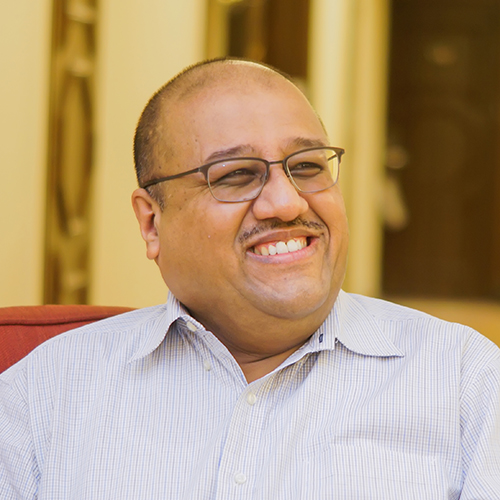
Sujeev is the founder CEO of beed. He leverages over 25 years of experience in diverse fields and geographies to advise, lead and inspire. With comprehensive networks in Nepal’s public, private, civil and diplomatic sectors, Sujeev is a trusted business and policy advisor and respected strategic thinker. From economies of developing countries to economies of human beings, he moves across different worlds, with his passion for the Himalayas being the axis.