NOTE: This NEFview is a throwback to July 2021, when the COVID-19 pandemic had crippled much of the world, Nepal included, and we were asking how the country might rebuild in a greener, more sustainable way. The views expressed reflect that moment and have not been updated. As Nepal reckons with the devastating floods of 2026, we invite readers to revisit these ideas and reflect on how they might apply to the recovery we now face.
Nepal entered yet another lockdown to prevent the spread of the COVID-19 virus. With the stalled vaccination efforts, rise in Covid-19 cases and deaths, and overall government response in disarray because of the political infighting, it is hard to see the light at the end of the tunnel. The economic impact of the pandemic has been severe on Nepal’s economy, and it continues to get worse. In fact, according to the Asian Development Bank, Nepal’s economy shrank by 1.9% in 2020. It is expected to grow by 3.1% in 2021, but the forecast seems optimistic in the wake of another lockdown. Job losses have been severe. The Study Committee established by the National Planning Commission, Nepal estimated that 1.6 million workers lost jobs due to COVID-19 and 1.2 million entered poverty. In a country where 3.5 million workers are employed abroad, this disruption to the domestic labor market due to COVID-19 is a shock. An already dire labor market situation has become much worse, pushing people further to look for economic opportunities elsewhere or risk slipping into poverty.
We are not out of the woods yet, but we should start thinking about how we want to rebuild our economy and create jobs at home. We must decide what type of economic recovery we want to promote in Nepal. Will we choose measures that reinforce existing economic structures, or will be rebuilt in a sustainable manner? Will this experience of living through COVID-19 pandemic provide the impetus to grow with improved environmental outcomes?
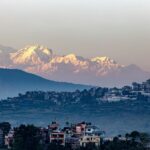
As Nepal went into lockdown in the spring of 2020, shutting down transportation and economic activities, the air quality improved greatly, and pollution levels were down. Skies across the country cleared. In May 2020, Nepali Times, an English weekly, shared pictures of Mount Everest visible from Kathmandu valley. The mountain is 200 km away from the valley and most residents of Kathmandu had never seen the tallest peak in the world from the city. The unintended consequence of the lockdown, clean air and lower pollution, came as a reminder for valley residents of how beautiful Nepal truly is, and why so many foreigners visit to get a glimpse of our mountains every year.
From Switzerland to Malaysia and Thailand, countries that are doing well are also the ones where environmental sustainability has been part of the economic agenda. Even in middle-income countries such as Indonesia and the Philippines, efforts to preserve the environment and create “green jobs” have been high on the governments’ agenda. The Philippines even has a law called “Green Jobs Act,” which aims to promote creation of sustainable jobs in sectors that preserve the environment. Among the policy incentives are special tax deductions and duty-free import of capital equipment for companies that create a “green economy.” Estimates from the International Labor Organization (ILO) suggest that 17% of total employment (7 million jobs) is comprised of green jobs in the Philippines.
I am currently based in Geneva, Switzerland, and it never ceases to amaze me that I can swim pretty much anywhere in Lake Geneva. It is one of the largest lakes in Western Europe, and the Swiss have managed to keep it clean despite all the infrastructure and economic activities surrounding the lake. But it was not always like this. In the 1960s, swimming in Lake Geneva was considered dangerous. The pollution level was so bad that by 1980s there were no fish left in the lake. But the canton of Geneva (one of its 26 states) decided to clean up the lake and restore its past glory. Public policies aimed at growing the economy while preserving the environment took center stage, and that has paid off handsomely. You can not only swim in the lake, but you get to enjoy filets de perche (local fish) in restaurants across the city. It is a major tourist attraction and creates considerable revenue for the city.
Kathmandu might not be able to achieve what Geneva did in the last five decades, but it can aim to replicate what Surabaya City, Indonesia did in the last 15 years. Surabaya’s “Clean and Green Initiative” increased the percentage of green space in the city through a community-based greening program. When I visited Surabaya in 2019, I was amazed by the city and its urban development. What was more impressive was that it was juxtaposed next to Surabaya’s Special Economic Zone and factories that export manufacturing products. In fact, I was there to visit a train manufacturing plant to understand their needs for a skilled workforce. The plant I visited was producing trains for export to Bangladesh. The city of Surabaya has a thriving economy that creates jobs for the city and the surrounding areas, while the city itself has become a model “green city.”
Manufacturing sector, which is typically considered to be the engine of growth, has remained stagnant in Nepal since the 1990s. If you look at the broader industrial sector in Nepal, which includes construction, then the sector has grown. But manufacturing sector itself, where the products are aimed at both domestic and export markets, has not grown much in the last two decades. In fact, Nepal’s inability to create jobs and its out-migration in the last two decades is closely tied to the decline of our manufacturing sector. We need to revive our manufacturing sector if Nepal aims to achieve higher growth, but we need to do this in a sustainable manner. We do not have to follow in the footsteps of countries that contributed to environmental degradation while growing and creating jobs.
If the COVID-19 pandemic has taught us anything, it is that there is a strong link between the environment and public health. Recent research has shown that all known pandemics, including the current one, have been caused by animal microbes that spillover to humans. This happens because of contact with wildlife in areas where land-use change is prevalent. Rapid and unplanned urbanization, deforestation, and environmental degradation make Nepal susceptible to future pandemics.
Revival efforts of Nepal’s manufacturing sector should focus on our niche export products such as tea, herbs, specialty garment, and processed food products, with a concerted industrial policy to support these sectors. The country should emphasize creating not just any jobs but creating as many green jobs as possible. According to ILO, green jobs reduce the environmental impact of enterprise and economic sectors; they include jobs that protect ecosystems and biodiversity; reduce energy, materials, and water consumption; de-carbonize the economy; and minimize or avoid generation of all forms of waste and pollution.
Nepal can introduce a public works program aimed at tackling climate change, preserving our national parks, cleaning our rivers and lakes, and creating green jobs. In fact, the current Prime Minister’s Employment Program (PMEP) can be turned into a “Green Jobs Program.” We can re-think the PMEP to create not only low-skill labor intensive jobs, but also middle-skill and high-skill ones. Participation of the private sector in such a Green Jobs Program would be essential for its success. Small and medium-size enterprises (SMEs) can be given special preference with conditions on job creation. Nepal’s wildlife conservation and forestry department should be given more resources to hire more staff and employ more workers on the ground.
A recent World Bank Study on the Kali Gandaki Watershed Project in Nepal showed that a large green public works program can create jobs across the skills-spectrum. Well-designed forest and watershed management too can benefit a range of economic sectors, including agriculture, hydropower, roads, water supply, and disaster risk management. The cost-benefit analysis done by the World Bank showed that the benefits of the program far outweighed the costs. There is evidence that green public works programs can create fiscal multipliers several times larger than the investment itself.
Tourism is another sector that has the potential to create a source of green jobs in Nepal. Sustainable tourism is an attraction in many parts of the world. Two countries where I have found this to be done well are Colombia and New Zealand. Having travelled to both countries, what stood out to me was how economically vibrant cities and communities can also be places that are the most environment-friendly and sustainable. Medellin, Colombia has become a model city for such development, where large companies co-exist with a city that is green, and urban space is designed to improve quality of life. In New Zealand, a large share of the workforce is dedicated to working in public lands and parks to preserve their environment. What more, when you go “tramping” (i.e., hiking, but the New Zealand way), you must bring back every trash you generate except your bodily waste. Everyone follows that religiously; hence, the parks and hiking trails are very well-preserved. It is a beautiful country just like Nepal, but it is also one of the most developed and eco-friendly countries in the world.
A massive, nationwide Green Jobs Program can be a gamechanger for Nepal. In the short run, it will provide the much-needed employment for Nepal’s youth and create income multipliers in different sectors. Jobs can be created in sectors such as waste management and recycling, sustainable agriculture and food production, sustainable forestry, manufacturing and supply chain management, energy supply and efficiency, and biodiversity and eco-system preservation. In the medium to long run, it will generate higher revenues, especially in the tourism sector, while achieving sustainable growth for the broader economy. We can take a page from Bhutan’s “happiness index,” which has changed the broader global conversation around development and its objectives and introduced a model of growth that is greener and more sustainable. Nepal is already one of the leaders in global wildlife conservative efforts in the region and is best positioned to leverage this experience towards “green growth” and a sustainable future.

Sameer Khatiwada is a macroeconomist with a PhD in Economics from the Graduate Institute of International and Development Studies (IHEID), Geneva, and a master's in public policy from Harvard University. He previously worked at the International Labour Organization (ILO) and the Federal Reserve Bank of Cleveland, and has led ADB operations in India, Bangladesh, Indonesia, and the Philippines. He is currently Principal Public Management Economist in ADB's Public Sector Management and Governance Sector Office, where he leads the sector's strategic and operational work on fiscal policy, public financial management, and climate finance. His research focuses on macro and fiscal policy, public financial management, industrial policy, and labor markets.