
Three round tables discussing Bangladesh-Nepal Relations, organized by Nepal Economic Forum (NEF) and Centre for Policy Dialogue (CPD), in Kathmandu, in Dhaka, and a December review, have produced a proceedings report that doubles as taking stock of the relation between the countries over the past years. The series did its job keeping a thin trading relationship thick enough to survive a change of envoy. What it has not yet done is turn that thickness into a pipeline. That is the task for the next 12 months.
The timing makes the task urgent. Both Nepal and Bangladesh were due to graduate out of least-developed-country status in November 2026, and both have asked for more time. But the preferences that come with LDC status do not last forever, and the instrument meant to replace them, a preferential trade agreement that has completed three negotiating rounds and is still waiting on a fourth, is not yet ready to do that job. If graduation day is the diploma, the recovery marketplace this piece describes is the first exam.
And that exam arrived sooner than expected. On 26 August, a glacial collapse sent flood and debris surging through the Bhotekoshi-Trishuli system, and reconstruction needs are now estimated at USD 4.7 billion. Hydropower stations, roads, bridges, and tourism infrastructure all took direct hits. Though remittances will absorb some of the shock, and insurance and catastrophe draw down mechanisms, they will not bear the rest of the recovery cost. Nepal must remember the lesson from the 2015 earthquake: the failures were in execution, verification, and leakage, on files that should have been bankable in the first place. Similarly, in this moment, Bangladesh’s response matters too. It should not arrive as a well-wisher. Rather, it should arrive with rails, equity, and a shared file.
Begin with the rails, because data moves faster than lentils, and so does money, once the pipe exists. A serious recovery marketplace is not another hydropower panel; it is a digital recovery and finance lab built on five rails, each one named and owned. The first is reconstruction payments. Milestone releases should be tied to attested progress, not to a paper certificate that arrives after the cement has already been diverted. Second is remittance-to-reconstruction. Nepal and Bangladesh draw on the same Gulf labor markets; thus, a tagged rail could turn a fraction of those flows into contractor working capital and household rebuilding. However, while doing so, remittances should not be mistaken for a substitute for a budget. The third is contractor financing. It requires invoice discounting on named receivables, so that a Bangladeshi or Nepali firm is not asked to carry a bridge project on its own overdraft. The fourth is digital insurance claims, parametric wherever the hazard can be measured. This matters because a washed-out bridge abutment does not sit waiting on a loss adjuster based in another city. The fifth is cross-border settlement so that a contract signed under the Preferential Trade Agreement (PTA) is paid in days rather than routed through a correspondent banking chain that treats Kathmandu and Dhaka as identical risk.
Bangladesh is already well placed to build this as it runs one of the largest mobile-money systems in the world, and that is not a boast so much as a spare part already sitting on the shelf. If these rails are paired with mutual recognition of electronic certificates of origin, trade facilitation and fintech stop being two separate panels at two separate conferences and become one system.
The rails need capital to run on, and that capital should be project-based private equity rather than a national appeal. The model should be straightforward: 20 to 30 reconstruction projects, each with a published investment profile covering offtake, contractor, corridor, cashflow, and sunset. Equity would take a slice of a named asset: a restored power plant, a flood-hardened bridge, a tourism circuit, rather than buying into a slogan about resilience. In addition, first-loss and results-based capital can sit underneath that equity, but only against a scorecard, with the note capped, floored, and dated. And recycled capital should stay tied to the capability Nepal actually retains: contractor certification, hydropower operations, corridor standards. To test this, a pilot should be sized small enough to be allowed to fail honestly: one transport-plus-power corridor, 20 to 40 attested firms, USD 15 to 40 million, run over 12 months. Then sell the scorecard, not the pitch. A fund without a project list is just a press release, and a project list without a payment rail is a tender that will leak.
None of this holds together if the underlying file stays private. The third piece, after the rails and the equity, is a shareable data hub, not a dashboard built for donors to admire. It needs three streams feeding into one pipe. The first is a Himalaya-to-Bay early-warning stream: glacial, river, and rainfall observations that Dhaka and Kathmandu can both read before the debris moves, because the hazard does not stop at a border, nor should the offtake contract. The second is a project-attestation stream, tracking who is building, what was contracted, whether the work actually exists, and whether payment is due, the same data that serves as collateral for both the equity and the rails. The third is a trade-document stream: electronic certificates of origin and transit milestones at Banglabandha-Kakarbhitta and Mongla, so that steel and cement reach a Sindhuli bridge or a damaged transmission line at a landed cost that makes the equity bankable in the first place. India must also be in that room for this to work, because transit cost is the tariff that actually matters here: a margin of preference that cannot move a consignment will never clear a private-equity committee.
Put together, these three pieces, the rails, the equity, and the hub, are what stand between the next monsoon and the recovery of tourism and the first 40 megawatts of restored hydropower. If rebuilt to a lower standard than what the debris took, none of it will survive the next season.
Four risks could sink this if they go unnamed and unaddressed: a fourth trade-negotiating committee that fails to convene this quarter; corridor language that names no responsible Indian agency, and sets no date; equity raised against a reconstruction slogan instead of a scorecard; and a data hub that ends up as a PDF passed around in email rather than a live pipe.
Three roundtables organized by NEF and CPD have given Nepal and Bangladesh a proceedings report. What comes next is the forum where the two countries stop pledging to each other and start co-owning a pipeline.
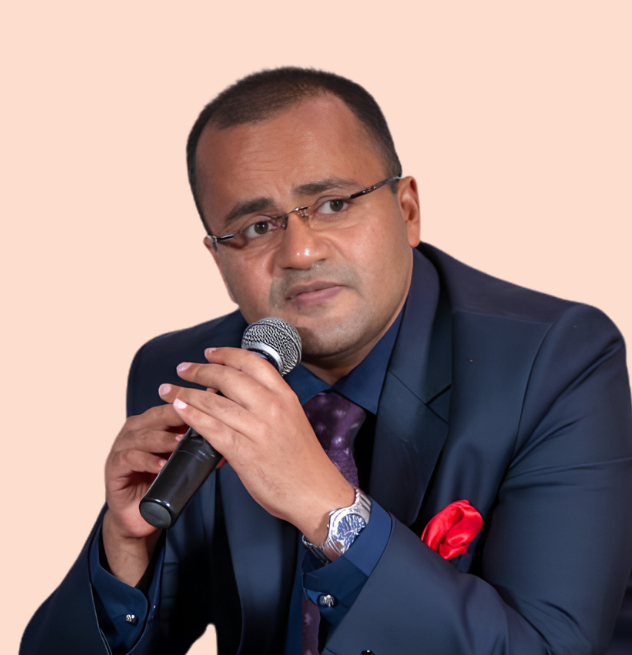
Dr. Syed Muntasir Mamun is the Director General of the International Trade, Investment & Technology Wing at the Ministry of Foreign Affairs, Government of Bangladesh, and serves as Chief Innovation Officer. With over 25 years of experience spanning diplomacy, trade, investment and finance, his work focuses on digital trade, sovereign AI, innovation partnerships and advancing economic opportunities for Bangladesh and the Global South.