
The orientation program for the Rastriya Swatantra Party (RSP) parliamentarians was a historical event as it sent a good message to work on planning before action. It reminded me of a leadership Thinkshop I conducted for parliamentarians in Bhutan when the People’s Democratic Party (PDP) won elections and was putting together a team for action. In both instances, the emphasis was on aligning values, expectations, and ways of working from the outset.
When Arnico Panday opened the RSP orientation session, he referred to some of the foundational principles – shunning privileges, leading by example, challenging feudal practices, and shunning habits like heaping flower garlands, spending time on aasangrahan (the practice of taking priority seats), and performative salutations.
In a country where people are just thrown into the deep end of the pool to swim or perish, it is important to understand the value of orientations. I hope this culture will be replicated in ministries, government departments, and other institutions.
There has long been a noticeable gap in this matter. I used to be completely surprised to observe the lack of basic etiquette of delegations, whether in terms of speaking or eating in formal settings. At the same time, this is a country where pictures in social media are often of leaders swamped in garlands and moving to an office, starting work without knowing what they are getting into. Against this backdrop, the orientation is a healthy tradition that has been started.
Importance of Transparency and Team Building: I often repeat what my friend Anil Chitrakar has to say – in Nepal, there is an abundance of individual brilliance, but we suffer from collective failure.
I am reminded of my time conducting internal audits at one of the Soaltee Group companies, where a staff member in the sales department used to lock away key documents in his drawer to prevent colleagues from accessing them. Eventually, I had to actually escalate the issue to senior management to break the locker so that the institutional information he had was accessible to all.
This highlights the broader issue of the need to build a culture of trust, collaboration, and shared ownership within organizations. At beed/NEF orientations these values are of utmost importance. So is team building. It is important to have different team-building events, be it celebrations or retreats, so that people get to know each other. Similarly, townhalls create space for open communication, allowing teams to hear directly from leadership and engage in dialogue.
This challenge is not limited to organizations. I used to get surprised when some former parliamentarians would share that they never interacted with party leaders in five years of their tenure! Instead, close coteries, popularly known in Nepali as aasey-paasey became gatekeepers of the leaders and access. Going forward, I hope RSP will continue to work on team-building events and ensure that they create ways to work collectively.
Communications is the Key: While moving up the hierarchy in my corporate career, I began to understand the importance of both internal and external corporate communication. I not only attended formal communication classes but also got the chance to engage and work with some of the leading corporate communication firms in the region. That is when I learnt that it is important to have formal and informal structures of communication, with internal communication being particularly critical.
Gone should be the days when individuals read what their party leaders have to say through social media posts rather than official channels such as emails from their office or their secretariat. Young professionals working at the Ministry of Foreign Affairs often share with me how they have to keep up with different unknown online media portals to understand what their bosses are thinking, rather than learn from townhalls.
In the current scenario, where anyone with a microphone and camera, often without disclosing their identity, can ask stupid questions, having clear communication protocols becomes even more important. Thus, in terms of communication, we hope that RSP will begin new working styles that other parties can also emulate.
Private vs Public Life: In a country where, apart from just bedroom activities and bathroom activities, everything is within the public glare, courtesy of overenthusiastic people, it will be really important to define functions that are private and functions that can be open to the public.
World over, we are seeing shifts to private events where people are not even allowed to take their mobile phones inside. In such a context, confidentiality must be respected. It is difficult to bring in these changes easily as we live in a culture where personal matters like meditation, spiritual exercise, or grief are public. In times of demise of family members or health conditions of people that family members would like to make private, there are people who click pictures and put it on social media. While individuals in public life cannot shun the glare of cameras and public interest, one should have the legal right to take on people who are spreading misinformation and disinformation. There must be legal ways to take action, similar to how the Government of UAE and Qatar are acting against people spreading misinformation and disinformation in the West Asia war.
We must never forget that the September uprising took place because politicians had fallen out of sync with a country that had already transformed. RSP now has a big opportunity to herald change and work on the basics. However, it is important to recognize that it is not that they will not make mistakes. Rather, the hope is that they will begin the practice of correcting their mistakes which the parties that perished did not.
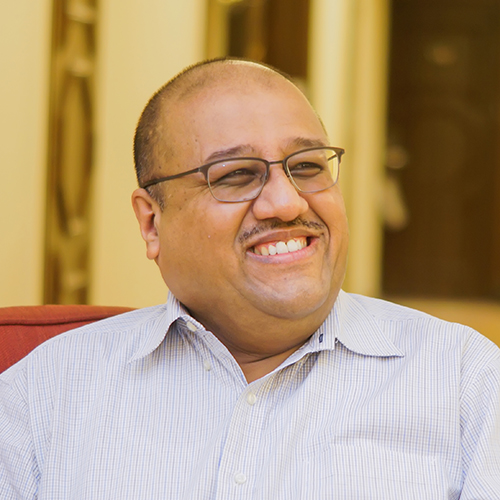
Sujeev is the founder CEO of beed. He leverages over 25 years of experience in diverse fields and geographies to advise, lead and inspire. With comprehensive networks in Nepal’s public, private, civil and diplomatic sectors, Sujeev is a trusted business and policy advisor and respected strategic thinker. From economies of developing countries to economies of human beings, he moves across different worlds, with his passion for the Himalayas being the axis.