As we reflect on six decades of partnership between the United Nations Development Programme (UNDP) and the Government and People of Nepal, I find myself returning to a simple question: what have we learned, and how do those lessons equip us for the future?
One lesson stands out above all others: sustainable development is never imported. Nepal’s remarkable progress ranging from expanding access to education and health services to strengthening democratic institutions and navigating the transition to federalism has been driven above all by Nepali leadership, resilience, and ambition. External partners can convene actors, de-risk investments, and provide technical expertise, but lasting transformation only happens when change is nationally owned and led.
That principle has guided our partnership since it began in 1965, and it is more relevant now than ever.
Over the past six decades, Nepal has undergone profound political, social, and economic transformation. It has transitioned from a highly centralized state to a federal democratic republic, reduced poverty, expanded access to essential services, and laid the foundations of a modern economy. Throughout this journey, UNDP has had the privilege of working alongside governments, communities, civil society organizations, academia, development partners, and the private sector in support of national priorities.
The history of our partnership mirrors the evolution of Nepal itself.
In the early years, UNDP’s support focused on building basic institutions and infrastructure. We helped introduce some of Nepal’s earliest data and planning systems, alongside aviation connectivity initiatives that linked remote communities to broader markets. The introduction of the country’s first computer decades ago is a reminder of how different development challenges and solutions looked in the past.
As Nepal evolved, so did our partnership. Our work expanded into governance reforms, local development, disaster recovery, peacebuilding, and the transition to federalism. Today, the focus is shifting toward climate resilience, digital transformation, and facilitating innovative financing for inclusive growth.
Amid these changes, the role of development partners has also changed significantly. In 1965, much of the emphasis was on building foundational capacity and financing discrete interventions. Today, success increasingly depends on helping countries strengthen institutions, unlock public and private investment, improve delivery systems, and navigate complex transitions. Development is less about individual projects and more about enabling lasting systems and partnerships.
Through all of this, the most important constant has been partnership itself.
Development outcomes rarely result from a single institution acting alone. In my view, one of UNDP’s most distinctive contributions has been serving as an impartial platform that brings together governments, communities, and all partners to address complex challenges collectively. That convening role is becoming increasingly valuable as development issues grow more interconnected.
Today, Nepal stands at another important moment in its development journey.
The opportunities are compelling. The country possesses abundant natural resources, a young and dynamic population, expanding digital connectivity, growing renewable energy potential, and immense tourism assets. Yet the challenges are equally complex. Climate change is already affecting communities and livelihoods. Many of Nepal’s talented youth continue to seek education, employment, and opportunities abroad. At the same time, hundreds of thousands of young Nepalis enter the labor market each year, underscoring the urgency of creating productive jobs and economic opportunities at home. Public resources remain constrained while development needs continue to grow.
Nepal’s progression to graduation from Least Developed Country (LDC) status is both a milestone and a transition. Over time, concessional finance may become less available, while expectations for domestic resource mobilization and private investment grow. Success will increasingly depend on the country’s ability to attract, align, and effectively deploy diverse sources of capital.
At the core of this transition is effective governance and service delivery. Strong institutions uphold democratic values while also determining whether policies translate into results, investments reach communities, and citizens receive quality services. Transparency, accountability, citizen participation, and efficient public administration help generate trust, improve service delivery, and create an enabling environment for economic growth. As Nepal embraces digital technologies, there is an opportunity to build public services that are more accessible, responsive, and inclusive while enhancing competitiveness and innovation.
Economic transformation must also be inclusive. Creating jobs, particularly for young people, will be one of Nepal’s defining challenges and opportunities in the coming decade. This will require investment in both traditional sectors and emerging areas such as sustainable tourism, green enterprises, circular economy solutions, digital services, and clean energy. The objective is growth that expands opportunity and reduces inequality. Across Nepal, encouraging examples ranging from women-led enterprises in the circular economy to renewable energy startups demonstrate how economic opportunity and social inclusion can advance together.
The same principle applies to climate action. Climate change is no longer a future risk for Nepal; it is a present reality. Communities are already experiencing the impacts of changing weather patterns, disasters, and growing environmental pressures. Climate action is also an economic opportunity. Investments in renewable energy, climate adaptation, resilient infrastructure, sustainable agriculture, and nature-based solutions can strengthen resilience while creating jobs and attracting investment. Initiatives such as community-based early warning systems and efforts to reduce risks from glacial lake outburst floods demonstrate how local innovation can strengthen national resilience.
Underpinning all of these ambitions is an evolution in development financing. Public resources alone are no longer sufficient to meet development aspirations. The future lies in better leveraging and aligning different forms of capital: public, private, domestic, and international. This requires stronger collaboration among governments, development partners, international financial institutions, and the private sector. UNDP increasingly sees its role as a catalyst: helping unlock investment, strengthen implementation capacity, and address bottlenecks that prevent resources from reaching communities.
In Nepal, travelers and traders have long gathered at a chautari to pause, reflect on the journey, exchange ideas, and prepare for the road ahead. In many ways, this 60th anniversary for us is such a moment.
We take pride in how far Nepal has come, but the most important chapters are still to be written. The next chapter of Nepal’s development will be shaped by how effectively the country harnesses its own talent, institutions, natural assets, and entrepreneurial energy.
UNDP remains committed to supporting that journey, just as we have for the past six decades: by listening, convening partners, helping unlock investment, and standing behind Nepal’s development ambitions.
Ultimately, Nepal’s future will be shaped by the innovation, resilience, and aspirations of the Nepali people. That has always been the most powerful driver of development.
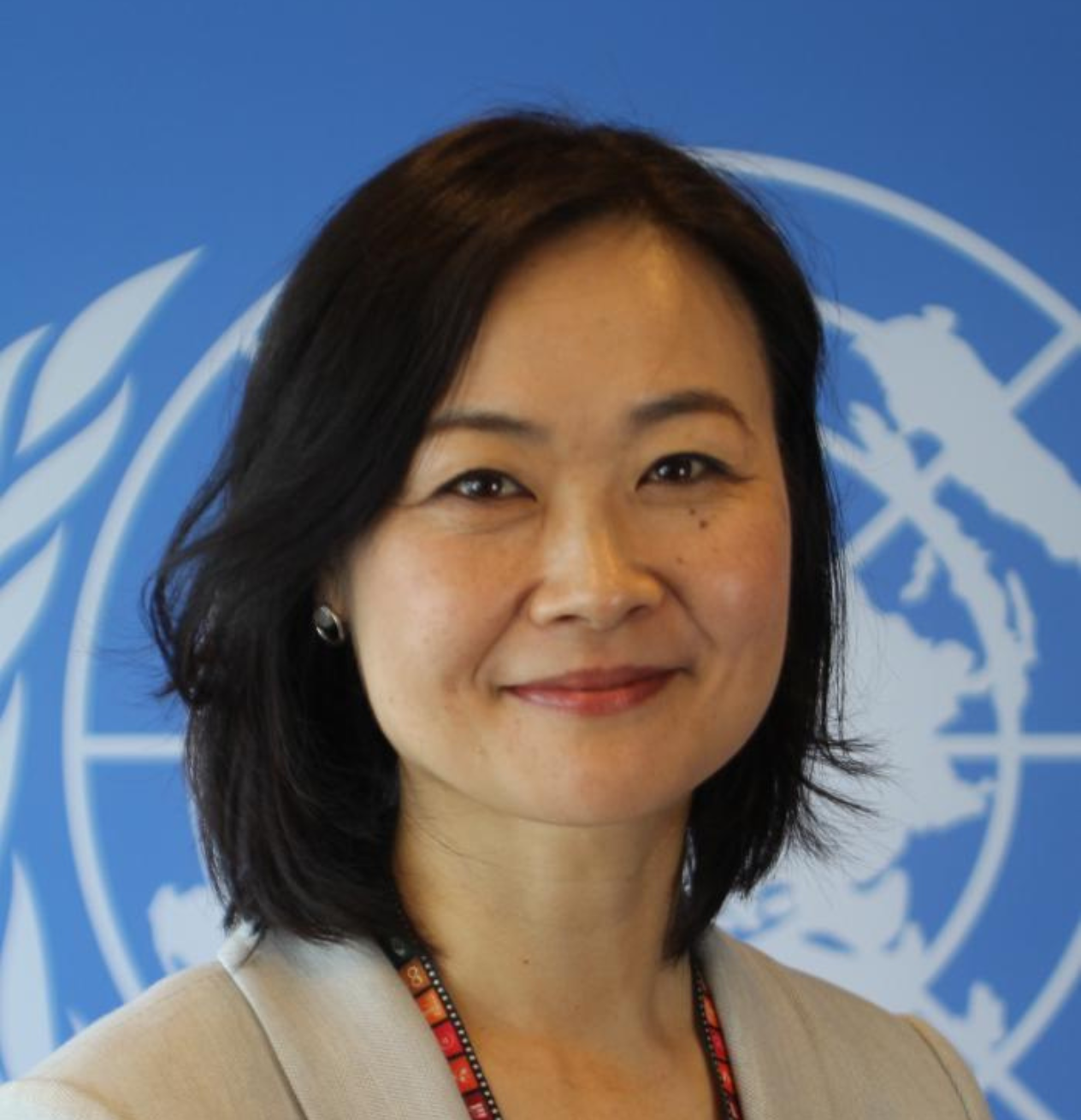
Kyoko Yokosuka is the Resident Representative of the United Nations Development Programme (UNDP) in Nepal. With more than 25 years of experience in the United Nations system, she has held leadership, policy, and programme management roles across Asia, Europe, and UN headquarters, focusing on sustainable development, governance, resilience, and partnerships. Prior to her current role, she served as Deputy Executive Coordinator of the United Nations Volunteers (UNV) programme. Her field experience includes assignments in Uzbekistan, Lao PDR, Myanmar, Bangladesh, and Nepal. She holds a Master's degree in Development Economics from the School of Oriental and African Studies (SOAS), University of London.