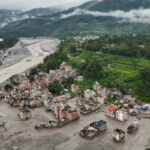
On the morning of August 26, 2026, a tsunami of water and debris tore down the Lhende, Bhotekoshi, and Trishuli river system after a glacier-rock collapse at Langtang Lirung Peak near the Nepal-Tibet border. Water levels in Trishuli rose by 9 meters, and the surge, carrying an estimated 2.2 million tonnes of debris, swept through Rasuwa, Nuwakot, and Dhading killing more than 1500 people and left thousands of people missing. The catastrophe caused damage and losses exceeding NPR 408.28 billion (USD 2.66 billion). According to the Rapid Damage and Needs Assessment (RDNA) report, reconstruction and recovery will require NPR 723.31 billion (USD 4.71 billion).
The destruction brought by the disaster now is testing the international climate finance system. In the disaster’s wake, Nepal has become the first country to ask the world’s newest climate fund to pay out, called the Fund for Responding to Loss and Damage (FRLD), introduced in 2026. The FRLD was established to help particularly vulnerable developing countries respond to economic and non-economic loss and damage associated with climate change, including extreme weather and slow-onset events. The Bhotekoshi floods expose major failures in the current climate financing system: the scale of the loss against Nepal’s climate financing capacity, the slowness of the climate finance framework designed to prevent it, and Nepal’s absorption gap.
A Disaster Nepal Didn’t Cause
The data leaves no doubt as to who is accountable. Nepal emits 0.54 tonnes of carbon dioxide per person each year, while the United States emits 13.6 tonnes, China emits 9.3 tonnes, and India 2.17 tonnes. Similarly, Nepal contributes less than 0.01% of global emissions, roughly 0.025% of the world’s greenhouse gases yet ranks among the most climate-vulnerable countries on the planet. The glaciers sustaining its rivers are losing ice at an accelerating rate, and the Hindu Kush Himalaya cryosphere is undergoing irreversible change driven by warming Nepal did not create. When it comes to climate justice, Nepal’s diplomatic posture has shifted accordingly. Foreign Minister Shishir Khanal has framed the demand for post-disaster aid as a moral liability rather than as a charity. The shift from aid to compensation is not exaggeration; it is the proposition of Nepal’s first-ever appeal to the Fund for Responding to Loss and Damage, the mechanism established at COP27 and operationalized at COP28.
The Price of Delay
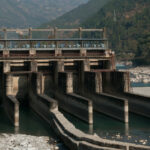
The economic toll is the strongest evidence that Nepal cannot absorb these shocks alone. According to the assessment conducted by National Disaster Risk Reduction and Management Authority (NDRRMA), the infrastructure sector was the hardest hit by the floods, with an estimated NPR 473.57 billion (USD 3.08 billion) required for recovery. Within the infrastructure sector, the energy and road networks suffered extensive damage. The floods also affected 13 hydropower projects with a combined capacity of 759 MW, and 5 solar plants with a combined capacity of 24 MW. The recovery of the energy and grid systems alone is estimated to require NPR 390.62 billion (USD 2.54 billion).
The flood also damaged 69 kilometers of roads. Of the 37 motorable bridges that were damaged, 33 were completely washed away. A further 68 suspension bridges were damaged. Overall, an estimated NPR 73.34 billion (USD 477.2 million) is required to restore the transportation infrastructure in the affected areas. The floods also had a significant impact on the productive sector, with around 1,806 hectares of crops being affected, along with livestock, poultry, and fish farming. In addition, 17 bank branches and 4,800 business establishments were affected. It is estimated that the recovery of the productive sector will require NPR 50.77 billion (USD 330.3 million).
Against all this stands Nepal’s climate finance balance-sheet, before the Bhotekoshi floods. We have a financing gap of USD 8.33 billion (NPR 1.280 trillion) a year to meet our own climate commitments. According to the Nationally Determined Contribution (NDC 3.0), the country’s official climate commitment under the Paris Agreement to tell the world what it will do to reduce emissions, how much it will reduce the emissions, and how it will adapt to climate impacts; adaptation prices at USD 18–20 billion (NPR 3.07 trillion) through 2035 and mitigation at USD 73.74 billion (NPR 11.33 trillion), with 85% of it from international support. The National Adaptation Plan (NAP), a formal framework used by countries to identify, prioritize, and manage medium- and long-term strategies for adapting to climate change, projects USD 47.4 billion (NPR 7.28 trillion) in needs to 2050, of which USD 45.9 billion (NPR 7.05 trillion) must come from external and private sources. A single flooding event can undo years of climate funding progress. The major crisis lies in the staggering mismatch between the scale of the destruction and the actual assistance available.
Failures in Delivery: International Perspective
A USD 49.9 million (NPR 7.67 billion) worth Green Climate Fund (GCF) project intending to protect 2.4 million Nepali from glacial lake outburst floods, entered the fund’s pipeline in February 2018 and was approved only in July 2025. Implementation began in March 2026, with USD 9.2 million (1.41 billion) disbursed to UNDP, months before the flood and far too late to build the early warning systems it promised.
Similarly, the FRLD, Nepal’s first step of call after the flood, has never paid anyone anything so far, as the demand has exceeded the supply of the original funds collected to disburse amongst the other 118 counties who have applied for the fund. Nepal’s appeal, signed by Finance Minister Swarnim Wagle and Forests and Environment Minister Gita Chaudhary, asks the board to treat the disaster as a special case and respond before its regular December meeting. The most troubling discovery is the disparity in the distribution of climate finance. Although GCF took seven years to provide funding for protection, multilateral and bilateral lenders funded the infrastructure that is now in ruins.
Failures in Implementation: Domestic Perspective
However, Nepal cannot blame the international system alone. A substantial share of adaptation finance is over-reported, and the country’s capacity to absorb funds is a genuine setback. There is no designated national authority to channel loss and damage money when it arrives, even though instruments like the BIPAD, a national hazard and damage-reporting portal, and forecast-based financing operated by NDRRMA already exist.
Most disaster financing is still reactive. For example, a flood that happens once every ten years could cost around USD 280 million (NPR 43.04 billion), but the disaster fund only has about USD 35 million (NPR 5.38 billion). There is some support from a USD 150 million (NPR 23.06 billion) World Bank Catastrophe Deferred Drawdown Option (Cat DDO), which is a credit line that gives countries quick access to funds after a disaster or public health emergency. However, tools like insurance, catastrophe bonds, and contingent credit are not used enough. The situation is even harder for households: 82% of those affected have to borrow money to recover, and many never fully recover. None of this excuses international failures, but it does explain why money, even when it arrives, does not automatically translate into resilience.
What Must Change After the Floods
The Bhotekoshi flood is a test case on how the world responds, which will show if climate finance truly matters. For this, four things must change. First, the Fund for Responding to Loss and Damage should make its first payment to Nepal and set an example for quick action. Second, multilateral financing such as the GCF needs to speed up its process to address the growing risks in the cryosphere. Third, the investing organizations must assess possible GLOF risks before funding the projects. Finally, Nepal must establish an empowered, inter-ministerial mechanism to oversee loss and damage mobilization, climate budget tagging, project execution, and early planning tools to manage the funds that it secures.
Nepal produces negligible emissions but faces huge risks, making it a clear example of a country suffering from a crisis it did not cause. Whether the fund pays out, and how quickly, will show the world if climate justice is real.

Aakriti Bharati is a Development Studies graduate and the founder of paryaa.np, a platform focused on climate finance, policy, and diplomacy. Her focus lies at the intersection of climate finance, international negotiations, and Nepal’s development challenges within that framework. She is currently exploring how global climate commitments translate into financing realities for vulnerable countries like Nepal.