In the café at Gulshan Club, Dhaka, I was flipping through the Occasions magazine. This made me reflect on how similar the photos in that lifestyle magazine were to those in many other magazines throughout South Asia. It also struck me that the common narrative about Bangladesh is often obscured by discussions on politics and societal issues, like the perspectives set for smaller countries. This prompted me to revisit the column I wrote for The Kathmandu Post, where I had discussed the societal transformation in Bangladesh. If we were to analyze the negative issues around politics in the US, for instance, like we do for Bangladesh or Nepal, then we can fill 100-page dailies every day with negative news about political strife and challenges. However, when I look around me, I continue to witness transformation and ongoing positive changes. Although challenges persist, I believe we can overcome them. After all, what would human lives be if there were no challenges?
Last weekend, we were in Dhaka to attend the second roundtable on ‘Bangladesh-Nepal Relations – A Renewed Outlook,’ hosted by the Center for Policy Dialogue (CPD), the leading think tank in Bangladesh. We, at the Nepal Economic Forum (NEF), hosted the first round in Kathmandu in June 2025. One of my major reflections during the trip was that it is always wonderful to have a Nepali Ambassador who can make us all proud. In the past three years, Ambassador Ghanshyam Bhandari has worked diligently to reshape Nepal’s image in Bangladesh, moving away from traditional narratives and positioning it as an emerging economy eager for growth. He is well-regarded in the right circles in Dhaka and has worked relentlessly on the job he is assigned to do i.e. building better bilateral relations. He has also successfully navigated key issues, such as completing the power trade agreement, increasing the number of Bangladeshi tourists visiting Nepal, and fostering stronger people-to-people ties. He has been kind to receive all visitors who connect with him, unlike many Ambassadors and embassies abroad who do not even bother to respond to emails or messages.
When he hosted us for dinner, it was wonderful to see how the embassy has transformed. To have a welcoming space and a nice dining table set up portrayed a sense of warmth. The experience was testament to the fact that you do not need so much money as you need the right mindset. Also, it was wonderful to meet the team at the embassy. Talking to the DCMs, Lalita Silwal and Yojana Bamjan, always gives me hope of a new crop of Nepali diplomats emerging. They are assertive women who carry themselves well, articulate well, and are proud to represent their country. The relations that think tanks build are always on a strong foundation of a strong, active embassy. We are fortunate to have one!
As we discuss the relationship between Bangladesh and Nepal, it is essential to mention India. In the words of our Senior Fellow Aman Pant, “the half-marathon distance of 21 kilometers” of Indian territory between Nepal and Bangladesh is a critical part for ensuring the smooth mobility of goods and people. As India seeks to take the center stage in the global geopolitical arena, the neighborhood is increasingly viewed as an irritant. However, I continue to argue that to build its image around the world, India needs to gain its credibility with its neighbors. Blockade, in case of Nepal, and cutting off visas completely, even for medical/humanitarian travel for Bangladeshis, does not go well in building a better image. Moreover, relying on pro-establishment media outlets to propagate stories and propaganda against neighboring countries is counterproductive. It does not speak well of a country aspiring to take the global center stage. So how do we continue to engage with this constraint?
For Bangladesh and Nepal, we should focus on areas that do not need India’s consent at this time. The two immediate areas of bilateral co-operation are increasing the number of flights between Bangladesh and Nepal from the current 13 flights a week. Second, we aim to boost the movement of Nepali students, both by increasing the number of Nepalis coming to Bangladesh for medical education and welcoming more Bangladeshis coming to Nepal for hospitality and management education. Nepal should develop special visas for Bangladeshi digital nomads seeking reliable electricity and uninterrupted internet without disruption while working in Nepal. Young enthusiastic Bangladeshis, I was told, even flew to Kathmandu via Bangkok. A small step can lead to significant movement and increased business!
The current geopolitical landscape makes multilateralism challenging, necessitating a shift towards strengthening bilateral relationships for future success. The icing on the cake at the roundtable on Sunday was the wonderful presentation by Dr. Syed Muntasir Mamun, Director General of International Trade, Investment & Technology Wing, Ministry of Foreign Affairs, Government of Bangladesh. He talked about future-building based on the past. He highlighted the opportunity for Bangladeshi companies to invest in a data center in Nepal for Bangladeshi companies, referencing the success of digital platforms like Pathao. He also emphasized the need to understand the deep traditions that link the two countries, be it the Vajrajogini temple in Bikrampur near Dhaka, or the UNESCO heritage site of the Buddhist Temple in Paharpur in the north. We must surely build the future on the past.
The political situation in Bangladesh is expected to improve, like what has happened in Nepal. Political uncertainty should not hinder the economic growth of the nation and its people, as we have observed in Nepal. It is important that we continue to achieve small victories as nations and in our bilateral relations. Both Bangladesh and Nepal, with their anticipated graduation from Least Developed Country (LDC) Status in November 2026 will be able to move forward and leave the past behind. As this transition occurs, donorpreuners and grantepreuners will need to adapt and reinvent their approaches. The focus will shift to business and investments. Progress will not be sudden; I firmly believe that sustainable and equitable growth must happen incrementally. We can learn from one other and grow together!
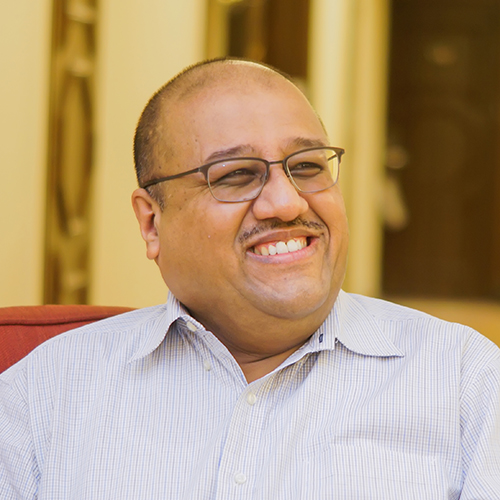
Sujeev is the founder CEO of beed. He leverages over 25 years of experience in diverse fields and geographies to advise, lead and inspire. With comprehensive networks in Nepal’s public, private, civil and diplomatic sectors, Sujeev is a trusted business and policy advisor and respected strategic thinker. From economies of developing countries to economies of human beings, he moves across different worlds, with his passion for the Himalayas being the axis.