A Glimpse into Europe’s Labor Crisis
In the picturesque town of Veera, Netherlands, we visited a restaurant last week around 7.30 PM on a beautiful summer evening. At this time of the year, the sun sets around 10.30 PM, and the restaurant boasted a fantastic location. And yet, we were informed that we could only order one item as the restaurant would be closing at 8 PM due to a staffing shortage.
Giuseppe Savino, a member of the Nepal Economic Forum Advisory Board and the Founder of Migration Protocol, explained that what we saw at the restaurant is not a one-off case. It is simply a reflection of the deepening labor crisis across Europe. There are not enough workers available due to substantial opposition existing towards hiring migrants. And with President Donald Trump’s policies criminalizing migration and immigration, many countries, including the Netherlands, have adopted similar attitudes.
During the NEFtalk we hosted in Kathmandu at the end of May itself, Savino raised an important question: Where will the 85-90 million skilled workers that Europe needs come from? We heard stories about employees being asked to leave offices promptly at 5 PM because there were no cleaning or security personnel available to stay on duty. A friend of mine invited a painter to provide a quotation for painting the exterior of his house; unfortunately, the painter said he could only come ten months later because he works alone and has no support staff. Similarly, another friend mentioned that the furniture they ordered, which was initially expected to take six months for delivery, had not arrived even after nine months. They are still uncertain about when it will be delivered.
These issues have greatly affected people’s lives. While it is easy to think that Nepal has countless problems, spending a few weeks in Europe reveals a broader spectrum of challenges!
Europe’s Inward Turn
The tendency for countries to focus inwardly has impacted societies globally, with Europe reflecting similar trends to those observed in the United States. The Governor of the Bank of France, François Villeroy de Galhau, expressed this sentiment at the Circle of Economists meeting in Aix-en-Provence, using the phrase “Make Europe Great Again.” However, what we need to realize is that Europe consists of many countries that must not only reach agreements but also make decisions through consensus.
Reflections from the Circle of Economists
The Circle of Economists recently celebrated its twenty-fifth anniversary, offering a wonderful opportunity to connect with a diverse group of people and participate in a session on soft power. Jean-Hervé Lorenzi, the Chair of the Cercle des Économistes, opened the discussions by emphasizing, “We must emerge from our conversations with ideas on how to ease the tensions between generations, borders, and communities.” As the meeting drew to a close, I found myself questioning whether we would truly succeed in this endeavor.
Rethinking Transatlantic Relations
In recent years, Europe’s actions have been primarily reactive, as many in the forum discussed. The question arises: how can Europe become proactive? How can it envision a future that is not clouded by the challenges in its relationship with the United States? One participant noted that the current situation resembles a serious rift that could result in a complete break in relations, much like a divorce. This highlights the potential for significant consequences if the relationship between Europe and the United States continues to deteriorate. Who knows what the consequences of such a situation might be?
The Neglected Regions: Central Asia, Africa, and Beyond
During our conversation, Djoomart Otorbaev, the former Prime Minister of Kyrgyzstan, pointed out that Central Asia has a population of 82 million — almost equivalent to that of Germany, the most populous country in the EU. This raises an important question: how much do the forum attendees genuinely know about Central Asia? There appears to be a significant lack of interest in understanding Asia, Africa, and other regions, which will play crucial roles in the coming century. Although discussions frequently center around China, they are often biased, framing its actions as problematic and depicting it as an adversary that must be challenged. This narrow perspective may inhibit a broader understanding of the complexities and opportunities present in these regions.
Europe has only recently emerged from its history as a colonial power, a legacy that lingers in discussions and perspectives surrounding various issues. For instance, when visiting Marseille, I learned about the deep divide between the northern and southern parts of the city, where buses stop running after 9 PM to prevent disturbances from people residing in the North affecting those in the South. Similarly, during car-free days in the city center, the absence of people of African origin is striking.
At the forum as well, African speakers highlighted the urgent need to shift the mindset used to view Africa. My fellow panelist, Naimi Korchi, President of the Africa Women’s Forum, emphasized that the narrative of “poor Africans waiting for food from Europe” must change. It is crucial to recognize Africa as a destination for investment and a source of talent that can contribute to European societies and help bridge existing gaps. By changing these lenses, we can better appreciate Africa’s potential and foster a more equitable partnership.
The Need for Increased Collaboration
What is needed is increased collaboration with institutions in Europe and other parts of the world. At the forum, 33 think tanks were present, marking at least the beginning of such partnerships. Following this, Nepal Economic Forum is set to host a partnership event with the Circle of Economists in Nepal next year. Similarly, individuals like Ravindra Ngo, founder of the Asian Network, are actively bridging connections between France, Cambodia, and Singapore.
Overall, perhaps Asia and Africa are more open to forming partnerships, while it’s time for Europe to reconsider its perspective on us. By fostering these relationships, we can create more meaningful and fruitful collaborations for the future.
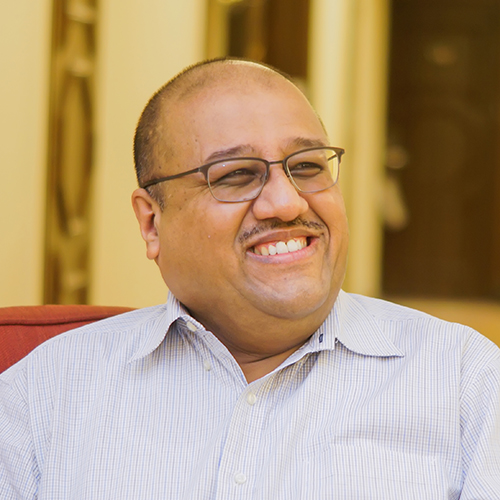
Sujeev is the founder CEO of beed. He leverages over 25 years of experience in diverse fields and geographies to advise, lead and inspire. With comprehensive networks in Nepal’s public, private, civil and diplomatic sectors, Sujeev is a trusted business and policy advisor and respected strategic thinker. From economies of developing countries to economies of human beings, he moves across different worlds, with his passion for the Himalayas being the axis.