
On every trip to India, one of the things I am never tired of doing is reintroducing Nepal to India, a neighbor with deep historical, cultural, political, and economic ties, but with prevailing challenges in understanding each other. This time, I had a book discussion in New Delhi that featured my new book, Nepal 2043, highlighting India as a key partner for Nepal’s economic growth. India offers Nepal a transit and stability in the country’s monetary policy stability through a pegged Nepali currency and remains a major market for Nepal’s trade and tourism businesses. India has also been a significant source of skilled labor for Nepal’s construction and related industries, contributing greatly to the growth and expansion of the country’s construction sector.
In the same trip, I was also at the Himalayan Echoes in Nainital, engaged in a conversation with Navroze Dhondy, a renowned advertising, marketing, media and communications maverick discussing my new book. The conversations here were very different than those in New Delhi. In contrast to the audience in New Delhi, people here know Nepal better as the border is only a couple of hours’ drive away and people in Nainital have kinship ties through marriage and family connections in Nepal. It was wonderful meeting people who shared that they have marital ties to Nepal or one of their parents or grand-parents originally hailed from there. The Pahari food and language in this area also closely resemble those in Far-West Nepal, with striking similarities in songs, music and art. People are also aware of their historical connection with the Gorkha Empire, which extended into the region, until it was annexed by British India following the signing of Sugauli Treaty in 1816. For many, Gorkhalis were seen as colonizers even before the British arrived.
The stark differences in the perceptions of Delhi and Nainital reveal a limited understanding of Nepal within India, despite the deep socioeconomic ties between the two countries. Emerging media actors such as vloggers are attempting to portray a transforming image of Nepal, yet their narratives often remain trapped in outdated frames. In the mainstream Indian media, growing Chinese investment and presence in Nepal have contributed to shaping a narrative that views Nepal as moving closer to China and drifting away from India. This has also influenced public perceptions, with claims of Chinese involvement even in youth-led protests and civic movements cutting across economic and educational groups, from cab drivers to think tank professionals and businesspeople. While it is undeniable that Tibetan socioeconomic influences are visible in the northern borderlands of Nepal, it is equally implausible to assume that mainland China exercises complete influence over the country.
The limited interaction among the youths of Nepal and India poses a challenge to a proper understanding of Nepal in India. I keep emphasizing the fact that almost half of the current Nepali population has practically no memories of Nepal being under a monarchy, or memories of the royal massacre, or even the decade-long Maoist insurgency. Similarly, a third of the Indian population may not have memories of the last South Asian Association for Regional Cooperation (SAARC) Summit held in 2014, nor an understanding of South Asian Cooperation as a concept. Perhaps no student pursuing undergraduate or graduate studies in India today was even born when the Gujral Doctrine laid the foundation for India’s neighborhood policy three decades ago. Very little is taught in Indian schools about the neighborhood with fairly limited sources or interests shedding light on Nepal in India. Even after 19 years of the abolishment of monarchy in Nepal, Indigo Airlines still refers to the Kingdom of Nepal on its website. Furthermore, Indian security officials have been conducting pre-departure checks at Kathmandu airport for the past twenty-six years, which speaks volumes about a prevailing ‘we-don’t-care’ attitude.
The September uprising has caught the attention of many people I met, but most of what they know about Nepal comes from social media and the kind of news that establishment-friendly Indian outlets want their audience to see. In New Delhi, there’s hardly any conversation about how much Nepal has transformed in the last twenty years, about its political journey, the reasons behind the September uprising, or the country’s incredible wealth of food, culture, and language. Many people are taken aback when they hear about Nepal’s federal structure or its mixed electoral system combining first-past-the-post (FPTP) and proportional representation. Few realize that Nepalis now live in 180 countries, and that four out of five Nepali families have someone working or living abroad – a reality that, along with social media has made Nepalis more connected to world like never before.
However, the situation in the border areas is different, with movement between the two countries increasing for business, service, employment, and tourism. Cross-border investments are common, most of them informal, and businesses are quick to take advantage of arbitrage opportunities. Therefore, the narratives in Delhi or Kathmandu need to be shaped by the realities and discourses occurring in the border areas, rather than the other way around.
Shamika Ravi, Member of the Economic Advisory Council to the Prime Minister of India, who also spoke at the Delhi discussion of Nepal 2043, has been encouraging me to take the conversations about reintroducing Nepal and the book in cities and towns of Indian states bordering Nepal and beyond the capital city. I also feel this could help shift the narrative in the nation’s capital. Nepal’s growth will benefit these bordering areas the most, as they can capitalize on opportunities in employment, trade, tourism and investment. Nepal’s realization of a high-income status by 2043 should be seen as benefiting not only Nepal but also the neighboring regions in India.
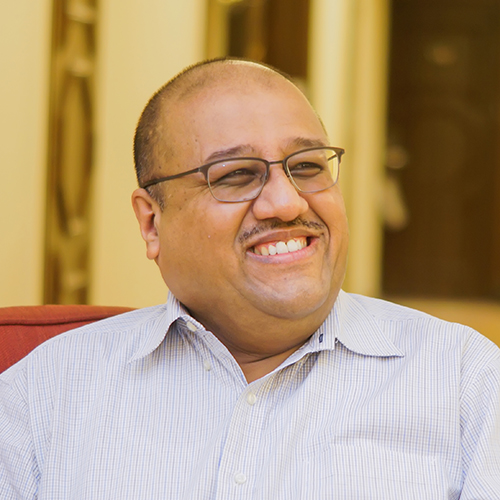
Sujeev is the founder CEO of beed. He leverages over 25 years of experience in diverse fields and geographies to advise, lead and inspire. With comprehensive networks in Nepal’s public, private, civil and diplomatic sectors, Sujeev is a trusted business and policy advisor and respected strategic thinker. From economies of developing countries to economies of human beings, he moves across different worlds, with his passion for the Himalayas being the axis.