In early June, the Nepal Economic Forum convened a roundtable discussion in collaboration with National University of Singapore’s Institute of South Asian Studies (NUS-ISAS) on the theme “Agency and Constraints – Small States in the New World Order”. The discourse was guided by Chatham House Rules, fostering a collaborative environment that welcomed diverse perspectives from the stakeholders representing thinktanks, academia, development practitioners and private sector. Participants reached a consensus that the global order is undergoing profound disruptions with small states poised to face significant repercussions because of these shifts. From Nepal’s perspective, despite having a population of 30 million, we are situated between two nations with the population of 1.4 billion, which contributes to the perception of Nepal as a small state. If Nepal were a part of the European Union, it would not be classified as a small state! Geographical location certainly influences relative size making this discourse critical as it considers its future.
In early May when I was in New Delhi, a day after the ceasefire between India and Pakistan, discussions about water rights were taking place. One gentleman in the conversation suggested that perhaps India might need to look to Nepal to secure its water sources, like how China did by annexing Tibet. This was the first time I had heard a security specialist say propose such an idea, and it made me realize that the aspiration of annexing territories is increasingly being viewed as a new normal. With multilateral agency like the United Nations merely acting as a spectator and only issuing statements after significant events, one must ask: how can small states ensure their protection?
The annexation of Tibet, which I have frequently discussed, primarily revolves around China’s desire to acquire its water resources. Those who express sympathy towards the Tibetans often do so to deter China from gaining control of this crucial source. This situation is different from India’s annexation of Sikkim, which is primarily driven by geo-strategic security concerns.
Global responses have rarely been effective in addressing issues of annexations and genocides. In the past decade, we have witnessed Russia’s annexation of Crimea, its attempt to annex Ukraine and the genocide in Gaza. It is deeply concerning that when such annexations occur, there seems to be little support for those affected.
I personally believe in the importance of developing soft power to counter the perception of small state, and there are several countries that have successfully achieved this. Switzerland in Europe serves as a classic example of a small country surrounded by larger neighbors that has established itself as the financial and intellectual capital of Europe, thereby wielding considerable soft power both regionally and globally. Similarly, Singapore has carved out a niche for itself in Asia by fostering reputable government, implementing good governance, promoting pro-investment practices and cultivating a talent pool of global citizens. This allure has attracted people to Singapore, significantly enhancing its soft power.
As a Non-Resident Senior Fellow at NUS-ISAS, I have witnessed firsthand how soft power can open doors for a nation. Dubai in the UAE has also positioned itself similarly developing a reputation as a hub for financial and global firms. By offering Islamic financial tools, maintaining a neutral geo-political stance, and promoting an image of a society that is opening up, Dubai has become the preferred destination for Islamic states. It provides a sense of order for South Asians, who reside there, while Europeans find its proximity and connectivity extremely advantageous for conducting business. Consequently, Dubai is emerging as a key hub for Africa, further enhancing its soft power.
Bhutan, despite its small population of 800,000, effectively wields its soft power through Gross National Happiness (GNH) Index and its vision of creating a Mindfulness City. The nation regularly hosts influential figures from around the world, capturing global attention; for example, when the King of Thailand flew his aircraft to Bhutan it was a moment resonated internationally. Over the past decade, Qatar has sought to position itself as a mediator in various conflicts, exemplifying this during the Gaza conflict and in its involvement with Democratic Republic of Congo. Sarina Theys examines the cases of Bhutan and Qatar to explore the soft power of these two non-Western states. The author argues that small states, despite their limited material resources, can still exert significant influence through the strategic use of soft power. In Africa, since 2012, my operations in Rwanda have allowed e to witness how the country wields soft power as a leader for the African Union and as a prominent voice in the Global South. Rwanda continues to draw inspiration from Singapore demonstrating the potentials of small states to impact the global stage.
For Nepal, home to citizens living in 180 countries, it is essential to focus on transforming its rich heritage, abundant natural resources, and the goodwill of its people into a form of soft power. This strategy can effectively deter ambitions from neighboring countries seeking to intrude on its territory or political space.
Nepal has been making notable strides in the Global Finance Global Soft Power index, achieving a rank of 105 out of 193 countries in 2024. However, there is still a need to aim for a higher position. The country is increasingly recognized as a neutral gathering place for South Asian and is considered a haven for women and LGBTQIA community. Nepalis are renowned for their hospitality and are making significant contributions to the global service industry.
With a strong level of digital adoption, Nepal can take inspiration from Estonia and harness digitalization to further enhance its soft power. Moreover, it is crucial for Nepal to continue to promote its narrative as a buffer state. Nestled between two large neighbors that have historically engaged in conflicts, Nepal plays a stabilizing role allowing both countries to conserve defense expenditures by not needing to deploy military forces along their borders. This buffer state narrative should serve as the cornerstone of Nepal’s ambition to establish its soft power.
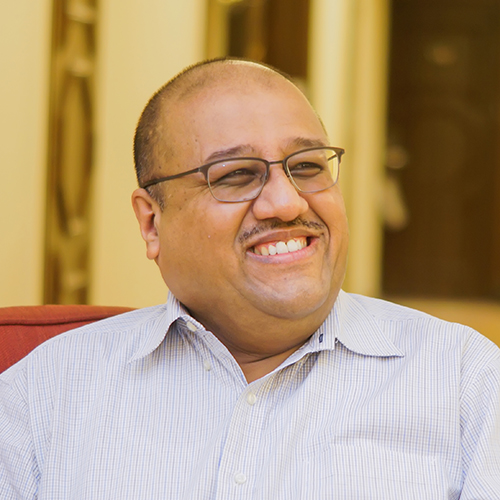
Sujeev is the founder CEO of beed. He leverages over 25 years of experience in diverse fields and geographies to advise, lead and inspire. With comprehensive networks in Nepal’s public, private, civil and diplomatic sectors, Sujeev is a trusted business and policy advisor and respected strategic thinker. From economies of developing countries to economies of human beings, he moves across different worlds, with his passion for the Himalayas being the axis.