
I always look forward to opportunities to travel within Nepal, be it for work or leisure. Oftentimes, living in Kathmandu makes one center Nepal around Kathmandu, leading to the tendency to generalize the country based on the status of the capital. As a result, transformation across the country is often overlooked by Kathmandu-ites. In Nepal 2043, I talk about the transformations that have taken place across Nepal pushing the size and scale of Nepali economy and driving its growth over the past twenty years.
I am often reminded of a story of my friend in Connaught Place, New Delhi in the early 2000s. He complained that the Indian economy was going downhill because the neighborhood had taken on a deserted look. That was also the period when Gurugram (Gurgaon) was beginning to expand rapidly, and many tier-2 and tier-3 cities were starting to bustle with new economic activity. When people write about shops in New Road having ‘To-Let’ signs and interpret this as a sign of the Nepali economy declining, I instinctively relate it to that New Delhi story. Twenty-five years ago, New Road was a shopping destination not only for people in Kathmandu Valley but for the whole of Nepal. Today, almost every city and town has its own version of New Road in forms of shopping streets and supermarkets.
I am also reminded of Thailand in the early 1990s, when nearly 70% of the national budget was spent on Bangkok. It was around that time that the decentralization of growth had just begun. Over the years, I have witnessed similar shifts, pushing growth beyond capital cities in Vietnam, Sri Lanka, Cambodia, Kenya and Rwanda, including Thailand. It is important to understand that in a country’s economic growth trajectory, the movement of economic activity away from the capital city does not necessarily indicate economic decline. Instead, the emergence of multiple growth centers beyond the capital marks the very process through which deeper and inclusive economic transformation takes place.
A drive from Bharatpur to Meghauli used to be a two-hour ordeal just a decade ago; today, it takes barely 30 minutes. The homestay business has expanded significantly with the improved road connectivity and better access to markets. During the monsoon, it was once nearly impossible to transport farm produce or take sick people to hospitals. Today both can be done in a jiffy.
As Nepalis grow prouder of their diverse agricultural produce and indigenous foods, demand for local products has increased. At the same time, people are gaining access to goods from across the world through localized delivery systems enabled by social media platforms. Stores now deliver to remote locations using mobile phones to connect microbuses and regular travelers on motorbikes who carry parcels to earn some extra income. These are local solutions responding to local challenges.
Improved road connectivity has also opened access for Indian tourists and travelers to different parts of Nepal. From the Sunauli border alone, an average of 300 passenger vehicles cross into Nepal each day, with peak volumes of 1,500 vehicles a day. Only a few of these vehicles reach Kathmandu, but their spending across the country has benefited numerous local businesses.
I have always been a firm believer in the narrative, “Nepal Grows at Night,” similar to Gurcharan Das’ discussion in his 2012 book about India. He explains how India grew despite the state, driven by private sector innovation and risk taking. The same holds true for Nepal, where private sector growth has been major driver of the nation’s economic transformation.
Private sector credit is nearly 90% of GDP, one of the highest in Asia that has led to availability of resources for growth. Rising real estate prices across the country have also increased value of the collateral, further expanding access to credit. Whether in education, healthcare, transport, or retail, the private sector is at the forefront of development. Yet, these perspectives are seldom fully considered when we discuss Nepal’s economic growth.
The Small and Medium Enterprises (SME) have proliferated across Nepal. On our trip to Narayanghat, we met Dinesh Chuke who is the President of the Hotel Professionals Federation Nepal in Narayanghat, which has over 80,000 SME members across Nepal. During our meeting, he mentioned that there are more than 150,000 enterprises working in hospitality-related businesses alone. Sitting in Kathmandu, it is easy to remain unaware of how these enterprises network, collaborate and build support systems.
Similarly, there is often a narrative of towns and cities emptying due to migration. While this may be true in some small pockets, people are very much present everywhere. Driving from Bharatpur to Bhairahawa, we encountered three large rallies celebrating different events across different municipalities participated by tens of thousands of people. Kathmandu often misses these vibrant festivals, fairs, and public gatherings, leaving us with a limited understanding of life beyond the capital.
The transformation beyond Kathmandu always gives me hope of Nepal’s broader economic transformation. We are now preparing for elections in March, and each election brings more people from outside Kathmandu into Nepali federal politics.
In 1990, after the first Janadolan, many individuals came to Kathmandu, engaged in politics, and sparked a significant wave of the internal migration as the valley opened up to a more diverse Nepal. In 2006, after the end of insurgency, people were surprised to see former insurgents take up positions of politics and bureaucracy, marking new phase of governance. Similarly, the election of Balen Shah as Mayor of Kathmandu Metropolitan City introduced a fresh set of political expectations and transformations.
In a country where nearly half the population is under 25, these shifts have changed the way people perceive governance and the role of the state. In the 2022 elections, there were 81% of parliamentary candidates were new faces, and the 2026 are expected to bring even more change.
We hope these transformations are reflected in the narratives emerging from Kathmandu, rather than the persistent Kathmandu-centric lens that often shapes how the rest of the country is understood.
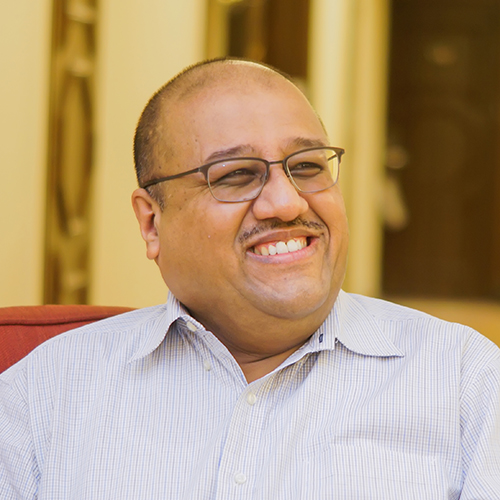
Sujeev is the founder CEO of beed. He leverages over 25 years of experience in diverse fields and geographies to advise, lead and inspire. With comprehensive networks in Nepal’s public, private, civil and diplomatic sectors, Sujeev is a trusted business and policy advisor and respected strategic thinker. From economies of developing countries to economies of human beings, he moves across different worlds, with his passion for the Himalayas being the axis.