The Himalayas are often described as remote or peripheral. But we are now realizing they are strategic —to climate outcomes, to economic connectivity, and to security considerations across Asia and beyond. From the European Union’s perspective, this region matters not only because it is vulnerable, but because what happens here will define patterns of cooperation, stability, and resilience in the decades ahead. I would like to offer some reflections to frame your discussions around the Forum’s three themes — Climate, Community, and Connectivity —and to position them within today’s evolving geopolitical and security context.
The Himalayas in a New Geopolitical Moment
We are living through a period of accelerated geopolitical change. You must have heard that many times over the past months!
The challenges to the international order have spurred a reshaping of trade relationships and a redefinition of strategic partnerships, and this at a time when global challenges, climate change foremost among them, require deeper cooperation.
Just on January 27, 2026, the European Union and India took a significant step in this direction with the completion of a Free Trade Agreement, alongside a Defense and Security Partnership Agreement. This marks a new phase in the EU-India partnership; one that links economic integration, strategic trust, and shared responsibility for regional and global stability.
Why is this relevant for the Himalayan region?
Because deeper EU-India economic and security cooperation inevitably brings greater attention to the spaces that connect us. The Himalayas sit at the heart of this evolving relationship: as a climate hotspot, as a corridor of connectivity, and as a region where stability or instability has far-reaching implications.
At the same time, the European Union continues to engage with China on global public goods, including climate action. While differences exist, cooperation remains essential, particularly in regions where shared risks, such as climate change, transcend borders.
The Himalayas therefore sit at the intersection of major geopolitical relationships. They are no longer shaped only by domestic or environmental factors; they are increasingly part of the strategic equation.
Forums like the Himalayan Future Forum allow regional perspectives, evidence, and lived realities to inform larger geopolitical and security conversations — before crises force decisions under pressure.
Climate: From Environmental Challenge to Climate Security
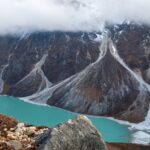
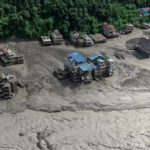
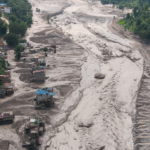
The program’s exploration of disasters, insurance mechanisms, and intergovernmental coordination are essential discussions. The Himalayan region is warming faster than the global average. Glacial retreat, extreme weather events, floods, landslides, and droughts are becoming more frequent and more severe.
But climate change in the Himalayas is no longer only an environmental or development issue. It is increasingly a security issue.
Water variability affects agriculture, hydropower, and urban supply. Disasters strain governance capacity and public trust. Competition over land, water, and energy can amplify social and political tensions — within countries and across borders.
In the Himalayas, water security is conflict prevention: when rivers are governed cooperatively and transparently, they become sources of stability rather than triggers of tension.
From the European Union’s perspective, climate action is, therefore, also about conflict prevention and long-term stability. Through the European Green Deal, the EU has committed to climate neutrality by 2050, while ensuring a just transition. Internationally, we see climate cooperation as an investment in peace, resilience, and human security.
In Nepal and across the region, EU support spans climate adaptation, disaster risk reduction, biodiversity protection, and renewable energy. These efforts are not just projects; they seek to strengthen institutions, reduce vulnerability, and help societies withstand shocks.
At the same time, global climate governance is changing. Traditional aid-based models are gradually giving way to approaches centered on investment, markets, and partnerships.
This shift creates real opportunities for the Himalayan region, particularly in the area of carbon markets and carbon credits. The EU-supported GRAPE project, which is part of this Forum, reflects this transition. The logic is clear: if Himalayan communities are protecting forests, restoring ecosystems, and managing landscapes sustainably, they should be able to access global climate finance — credibly, transparently, and at scale.
Well-designed carbon mechanisms can support livelihoods, attract investment, and strengthen environmental governance. Poorly designed ones can undermine trust and equity. That is why strong institutions, safeguards, and informed dialogue are essential — and why discussions at this Forum are so timely.
Community: Human Security, Migration, and Stability
Climate change ultimately affects people. And it is at the community level that security is either reinforced or eroded. Across the Himalayas, climate stress intersects with limited economic opportunity, unequal access to services, and demographic change. These pressures are reshaping livelihoods and social structures.
One of the most significant consequences is migration and displacement.
Climate-induced displacement is likely to become one of the defining global challenges of this century — larger in scale than anything we have faced before. In the Himalayan context, this includes rural-to-urban migration and international labor migration.
Nepal’s migration story increasingly has a European dimension. Nepali citizens are present in Europe as workers, students, and contributors to our societies. This creates shared responsibilities but also shared opportunities.
Migration has a clear security dimension, but it is also an economic and social reality that must be managed rather than feared.
From the European Union’s perspective, the challenge is to ensure that mobility pathways are safe, legal, and dignified. But equally important, is to address root causes through climate adaptation and local economic opportunity. This development must be people centered. Growth without inclusion breeds instability.
Empowering women and youth is particularly crucial. Women play a central role in managing natural resources, sustaining households, and preserving cultural traditions. Young people bring innovation, energy, and new perspectives. Investing in their education, skills, and leadership is not just a social priority, it is an economic and political necessity. This is also why the participation of the Youth Fellows at this Forum is so important.
Community resilience is also closely linked to local economies. Strengthening local value chains, supporting small and medium enterprises, promoting sustainable tourism, and adding value to local products can create jobs while preserving cultural identity. I am so pleased the Forum’s second day will feature the “Himalayan Haat,” showcasing products, food, and art from across the region. This is a powerful reminder that culture and creativity are not side issues, but central pillars of sustainable development.
Connectivity: Strategic Infrastructure and Trust
Connectivity is the third pillar of this Forum — and one of the most sensitive.
Infrastructure and connectivity are essential, they can unlock opportunity, reduce isolation, and integrate markets. But in fragile mountain ecosystems and complex geopolitical environments, they also carry strategic and security implications.
Poorly planned infrastructure can increase disaster risk, environmental degradation, financial vulnerability, and ultimately political tension. Connectivity is not neutral, it must be designed carefully.
This is why the European Union promotes high-quality, sustainable connectivity, through our Global Gateway investments. Our focus is on transparency, environmental and social standards, financial sustainability, and local benefits.
Connectivity must serve people — not create new dependencies.
Digital connectivity deserves particular attention. For remote communities, digital tools can transform access to education, healthcare, finance, and markets. But digital inclusion requires investment in skills and governance, so technology narrows gaps rather than widening them.
Connectivity is also about people-to-people ties. Academic exchanges, research partnerships, tourism, and cultural cooperation build trust — the most precious resource in an uncertain world.
As development finance models evolve, trade and investment will increasingly replace traditional aid. This makes governance, predictability, and regional cooperation more important than ever.
Conclusion
The Himalayas matter — not only because they are vulnerable, but because they are central. Central to climate security, to human security,
And increasingly central to regional stability.
Through the Forum, I hope your conversations move beyond diagnosing problems toward identifying new mechanisms, new partnerships, and new ways of managing shared risks.
From the European Union’s perspective, partnership is the guiding principle. We come not with ready-made answers, but with a commitment to listen, to learn, and to act together.
I wish you thoughtful discussions and meaningful outcomes.

Veronique Lorenzo is the EU Ambassador to Nepal. She was previously the Head of the Division for South America in the European External Action Service. An economist by training, Veronique has over 30 years of international experience, mostly in development cooperation and has lived and worked in a number of fragile and conflict affected countries, including Mozambique, Afghanistan, Uganda, Myanmar and Somalia where she was the EU Ambassador from 2006 to 2008. At the EU Headquarters, Veronique has been Head of the Environment and Biodiversity and the Health, Education, Culture and Research units at the European Commission (Development Cooperation Directorate). She has represented the European Commission at the Board of a number of global initiatives, notably the Global Fund for Aids, Tuberculosis and Malaria, and the Global Partnership for Education. She is a French and Spanish national and holds a BSc in Economics from the LSE and an MSc in Agricultural Economics from Wye College.