
Professor Jack McCarthy at Babson College has developed a case study to look at how leaders in emerging markets manage their lives. When the case study is discussed, I love to make a class visit in person or virtually, especially to understand how young minds are processing this. It is also a great opportunity to reflect on the questions these young minds ask. The class visits are now not limited to Prof McCarthy’s class. There are also other classes I attend where the case study is discussed. Besides these, there are now different meetings set after which I spend many hours reflecting at the past and looking ahead at the future. Overall, this has now developed into a seventy-two-hour sabbatical that I encourage many people to curate with university professors or others with whom one has worked with or practitioners one has been sharing their life’s journey. I, in turn, have been hosting these for people who would like to spend time reflecting on the leadership journey.
The timing for this year’s seventy-two-hour sabbatical was special as Nepal had just voted a new government to power indicating a tectonic shift in how the country will be governed and how economic development and growth will take center stage. This was a great real context to also discuss my new book Nepal 2043, which was just released before the September protests and will be revised to reflect Nepal’s historic change from protests to revolution through the ballot boxes. It was interesting to really talk about the road forward rather than discussing problems like in the past. While discussing with students, I emphasized on three things which has been also focus of the work I do either through beed or the Nepal Economic Forum (NEF).
First, understanding geopolitics is becoming even more important. For a country that has seen a lot, young people in United States need to really understand what is happening around the world as they will be competing for resources, talent, and markets with emerging economies. The world is moving to Asia with China and India poised to become the leading economies by 2050 taking back the position they had four centuries ago. In this context, I talk about the importance of understanding a country like Nepal which is important from both geopolitical as well as a locational perspective. Like Switzerland, it stands at the cusp of becoming the link state very much like it enjoyed economic prosperity as an entrepot for trade between India and Tibet four centuries ago.
Second, technology and geopolitics will get more entangled as we see the competition between different technology be it 5G communication platform or Artificial Intelligence (AI). With the West Asia war, we have also seen vulnerability of states. Given this context, I often argue that there will be newer emerging centers for data like Bhutan or Nepal that will position to have back-ups for global corporation that are always under threat of cyber attacks. The concept of cyber-gurkhas, that I wrote in Nepal 2043, is also worth noting in terms of leveraging the Nepali brand perception of managing security for physical assets or cyber assets and centers. Further, technology will need more human coordination as humans would be required for building and maintaining the technology. For instance, jobs like social media strategist or SEO specialist did not exist fifteen years ago. Similarly, there will be more jobs that will be created such as just designing or maintaining hardware to producing and selling hardware and software. Thus, while many jobs will be lost to innovation, a significant number will also be created, due to which being in the right spot becomes even more important.
Third is the increased value of human interaction. During the sabbatical, I was sharing about in-person meet platforms and speakeasy dinners are becoming popular in Europe where human interaction without phones is one of the key requirements. While AI can help to do many things, it will never replace the hug of a mother or a child or the joy of conversations between people in person be it in a home setting or a café. The human mind is increasingly being exposed to the world and consuming content from all corners of the globe due to great innovation in language translation as well as proliferation of the internet. However, people are getting lonelier as time with near and dear ones is reducing.
These are just some points that came across through self-reflection. Overall, the key to the future of young people who will be taking on leadership positions as professionals and entrepreneurs in the next decade will depend on how much they can find time to be with oneself, reflect, and learn. Perhaps this will be one of the biggest leadership traits for success.
Prof. Jack McCarthy teaches about the VUCA world: volatile, uncertain, complex, and ambiguous. Last year’s geopolitical shift and technological innovation during COVID and the rise of AI will surely make it important to understand the VUCA world even more closely using different lenses. This also means more time for reflection and perhaps more sabbaticals and retreats.
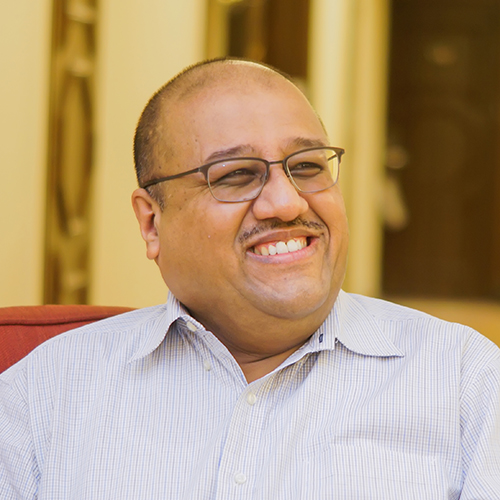
Sujeev is the founder CEO of beed. He leverages over 25 years of experience in diverse fields and geographies to advise, lead and inspire. With comprehensive networks in Nepal’s public, private, civil and diplomatic sectors, Sujeev is a trusted business and policy advisor and respected strategic thinker. From economies of developing countries to economies of human beings, he moves across different worlds, with his passion for the Himalayas being the axis.