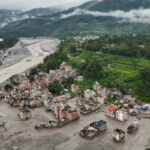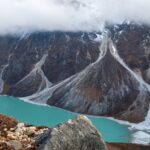
On August 26, 2026, a mass of rock and ice broke loose high above Langtang Lirung, bedrock and glacier collapsing together, and came crashing down the mountainside. What followed was a destructive surge of ice, rock, and debris flowing downstream, causing extensive loss of life, displacement and damage along the Bhotekoshi-Trishuli-Narayani river corridor. Nearly a month later, thousands of people are still missing, their families are still waiting for answers. But the flood did not only take lives, it also demolished critical infrastructure that keeps Nepal’s economy running.
A Direct Hit to the Backbone
The flood damaged or disconnected 13 operational hydropower plants, among them Rasuwagadhi, Chilime, Trishuli 3A, and Devighat. More than 430 megawatts vanished from the national grid overnight. The damage went beyond turbines to headworks, dams, powerhouses, substations, switchyards, transmission lines, but also the roads and bridges needed to reach and repair it. However, that single number understates the damage. Those plants represent over a tenth of Nepal’s entire installed generating capacity, in a country that draws more than 95% of its electricity from hydropower. Therefore, this is not a sector on the margins of the Nepali economy, it is the backbone. The government now estimates it will cost more than NPR 151.45 billion (USD 997.13 million) just to rebuild the hydropower infrastructure.
The Cost Nepal Won’t Get Back
That price tag is only half the story. The bigger loss is what Nepal won’t earn. Since 2021 AD(2077/78 BS), Nepal has gone from an occasional power importer to a genuine electricity exporter, first sending surplus power to India and, more recently, to Bangladesh as well. That shift has been paying off: in the fiscal year 2025/26 AD (FY 2082/83 BS), Nepal earned a record NPR 29.32 billion (USD 191.2 million) from electricity exports alone, its best year yet as a net power seller. Before the floods, Nepal was sending roughly 1,000 megawatts of power across its borders during the monsoon season, when its rivers ran high. Since the disaster, that figure has reportedly fallen to around 650 megawatts, and Nepal’s own electricity authority says exports to Bangladesh have effectively stopped. The country’s best export year on record has collided, almost immediately, with its worst infrastructure disaster.
The Cushion Nepal Cannot Afford to Lose
For a developing economy, that lost revenue matters more than the number on paper suggests, because what’s really at stake is foreign currency. Earnings from a foreign buyer allows Nepal to pay for imported fuel, machinery, and medicine without draining its reserves or leaning further on foreign debt. They cushion the exchange rate and reassure lenders. Electricity exports had quietly become one of Nepal’s more reliable sources of that cushion. This is not incidental but rather a government strategy. Nepal Electricity Authority officials have said growing exports will strengthen foreign exchange earnings, and the government’s own export roadmap targets 15,000 megawatts by 2035 explicitly to narrow the trade deficit with India. That plan is now at risk, and losing even a few hundred megawatts of it, right when the country needs capital to rebuild, tightens the same belt from two directions at once.
An Untapped Alternative
The floods are a reminder that no country should put all its eggs in one basket. When more than 95% of a nation’s electricity flows from one source, one bad month can undo years of gains. Diversifying energy is a hedge, not a nicety. Nepal has barely touched its other renewable options. Solar power currently makes up only around 3% of the country’s installed electricity capacity, despite Nepal sitting on estimated solar potential ten times larger than its total hydropower capacity. Wind energy is essentially untapped. Even more overlooked: researchers at Tribhuvan University’s Research Centre for Applied Science and Technology have identified 30 natural hot springs scattered along river valleys such as the Kaligandaki, Trishuli, and Bhotekoshi basins, Tatopani and Myagdi among them, that could support direct-heat agriculture and small binary-cycle geothermal power plants. However, as of now none of these alternatives is being pursued at scale in Nepal. That failure to diversify is not just a missed opportunity but rather a symptom of something deeper.
A Problem Bigger Than Energy
Growth economists have found that what predicts a country’s future prosperity is not just what it sells today, but how much accumulated know-how sits behind it. A country that has built specialized skills and capabilities has more directions to grow into; whereas a country that sells the same narrow set of goods and services will see its growth stagnate. Harvard’s Growth Lab captures this with its Economic Complexity Index (ECI), which measures that depth of know-how across everything a country exports, and has shown ECI to be a strong predictor of long-term growth.
By that measure, Nepal’s hydropower exports look less like a win and more like a missed opportunity to build something more durable. Selling electricity abroad has helped the balance sheet, but it functions more like exporting a raw commodity than building a knowledge-intensive industry: once a dam is built, moving the power it generates across a border takes little specialized skill. The numbers bear this out. Nepal’s ECI score is -0.12 (2024), ranking it 88th out of 145 tracked economies, below the global average of roughly zero, on a scale that runs from Japan’s +1.7 at the top to Chad’s -3.5 at the bottom. Its export basket reflects the same story: in 2024, 75% came from services, with agriculture (7.7%) and textiles (5.7%) trailing far behind, a narrow set of goods and services that other countries can produce just as easily. Nepal ranks behind India and Sri Lanka regionally, though still ahead of Pakistan and Bangladesh, a reminder that low complexity, not just low income, is the deeper problem the country faces.
Together, these two pictures show the real risk: Nepal depends on one geographically concentrated resource for a meaningful share of its foreign earnings while sitting in a low-complexity position globally. Diversifying energy sources would do more than protect against the next flood. It would also push Nepal toward the kind of varied, higher-complexity economy that compounds growth over time.
Rebuilding Right
The floods that damaged 430 megawatts of hydropower were a warning: Nepal can’t keep betting its future on a single river system. The lesson is not that hydropower was a mistake; Nepal’s rivers remain a genuine advantage. However, the more important lesson is that no single sector should carry that much weight alone, the same reason a household spreads its savings rather than betting everything on one asset. Solar, wind, and geothermal can give Nepal more than one basket to fall back on. Nepal needs to diversify its energy infrastructure and move the nation toward energy security and resilience before the next flood makes the choice for Nepal.

Sunita Shahi is currently an intern at the Nepal Economic Forum. She recently completed her Master's in International Development, specializing in governance and inequality, at IE University. She is interested in analyzing development challenges across developing countries, with a focus on how governance structures shape inequality outcomes. Her previous work includes a role in the strategy department at Ogilvy Dubai, where she collected primary data and developed recommendations based on her findings.